

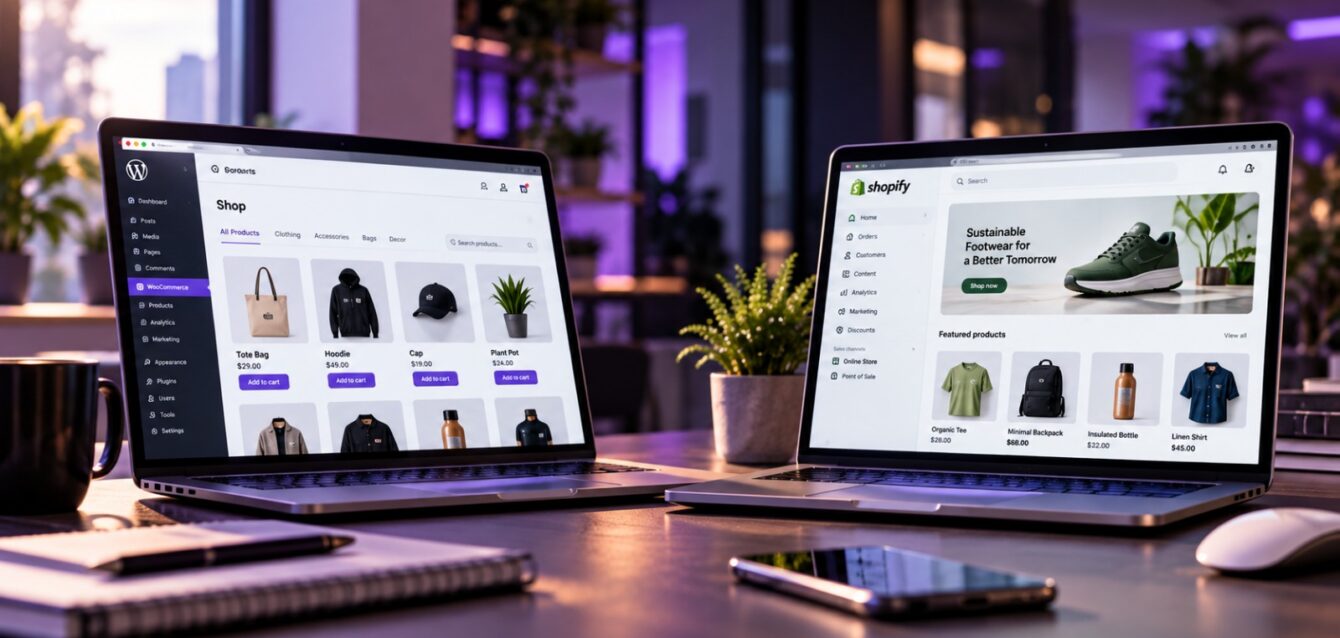
WooCommerce or Shopify? Which E-Commerce Platform Is Right for German SMEs?
Businesses looking to launch or modernize an online store often face the choice between WooCommerce and Shopify. Both platforms enable professional online selling, but they differ significantly in terms of usability, technical control, costs, and maintenance requirements. For German SMEs, the decision should therefore be based not only on the initial cost but also on their specific business requirements.
WooCommerce: Flexibility and Technical Control
WooCommerce is an open-source e-commerce solution built on WordPress. Businesses can customize their online stores using themes, plugins, and custom development.
WooCommerce is particularly attractive for businesses that already have a WordPress website. For example, a manufacturer can integrate its online store directly with a company blog, detailed product information, and custom landing pages.
Integrations with inventory management systems, CRM solutions, and various payment providers are also possible. However, this technical freedom comes with additional responsibilities: hosting, updates, backups, security measures, and compatibility between installed extensions must all be managed.
The software itself is available for free. Nevertheless, costs arise from hosting, premium extensions, development, and ongoing maintenance. For more complex requirements, custom development may involve additional effort and expense.
Shopify: Easy Setup and Centrally Managed Infrastructure
Shopify is a hosted e-commerce platform that provides hosting, essential store functionality, and technical infrastructure through a centrally managed system. Businesses can manage products, orders, payments, and marketing through a single administration interface.
For smaller businesses without an in-house IT team, this can significantly simplify the setup process. For example, a growing fashion retailer can manage products, use multiple sales channels, and configure payment options without having to manage servers independently.
Shopify offers numerous apps and design templates. Customizations are also possible, although they are subject to the platform’s technical capabilities and subscription plan limitations.
Costs typically include monthly subscriptions and potentially additional app or transaction fees. In return, much of the responsibility for managing the technical infrastructure is handled by the platform.
What Does This Mean for German and European Online Stores?
Regardless of the platform, businesses must consider data protection, tax requirements, and consumer rights.
This includes appropriate GDPR-compliant data processing, transparent shipping and return policies, and correctly configured payment and tax processes. For cross-border trade within the EU, the One-Stop Shop (OSS) scheme can, for example, simplify VAT administration.
Both platforms support relevant features and extensions. However, the availability of these technical features does not replace a thorough legal and tax review of the specific online store.
The right e-commerce platform is not the one with the most features, but the one that supports your business processes, remains cost-effective, and can grow alongside your requirements.
OTIN LABS
Scalability and Long-Term Maintenance
Shopify provides a centrally managed foundation for businesses that want to minimize their technical administration responsibilities. WooCommerce, on the other hand, offers greater control over hosting, data, and custom extensions.
Which solution is more cost-effective in the long term depends on the product range, order volume, integrations, and available internal resources. With Shopify, ongoing costs and platform dependencies should also be considered, while WooCommerce requires consistent technical maintenance and support.
Conclusion: Business Goals Determine the Right Platform
WooCommerce is particularly suitable for businesses that require extensive customization and technical control. Shopify offers advantages for companies looking to launch quickly and simplify their online store management.
OTIN Labs helps SMEs plan and select the right e-commerce solution based on their specific requirements, budgets, and long-term growth objectives.